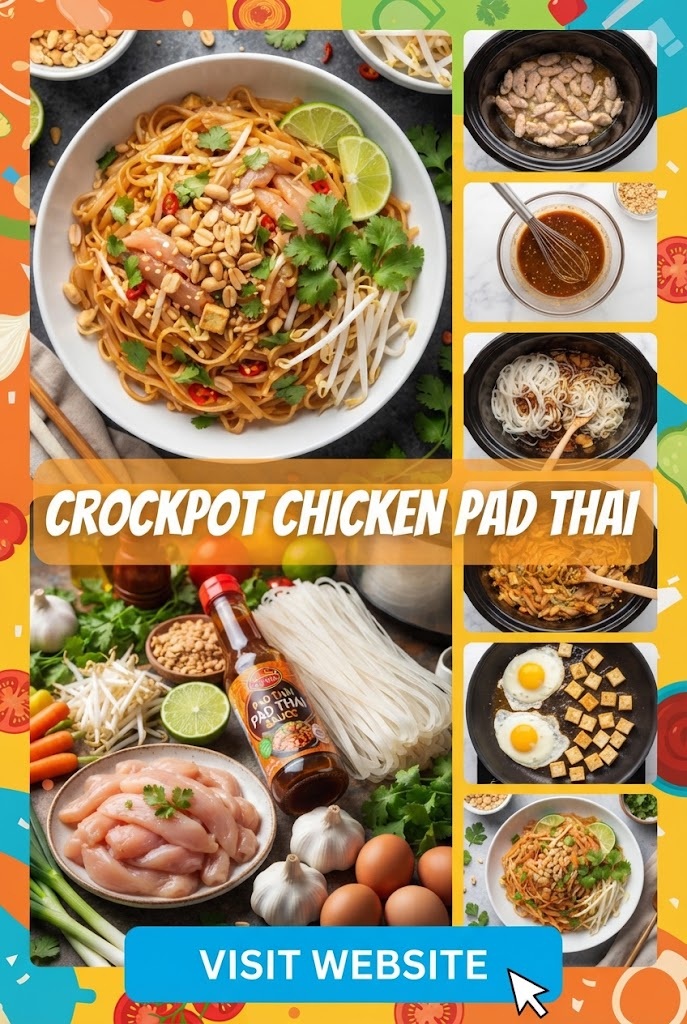
Crockpot Chicken Pad Thai
Pad Thai is arguably the most famous export of Thai cuisine. It is a dish that dances on the palate, offering a sophisticated balance of sweet, sour, salty, and spicy notes. While traditionally prepared in a roaring hot wok with rapid-fire tossing, the modern home cook often seeks a way to capture those complex flavors without standing over a stove for forty minutes. Enter the Crockpot Chicken Pad Thai.
This guide explores how to transform a high-heat stir-fry classic into a slow-cooked masterpiece. We will dive deep into the history of the dish, the science behind the ingredients, the nuances of the slow-cooking process, and how to achieve that restaurant-quality texture in the comfort of your own kitchen.
The Cultural Heritage of Pad Thai
To truly appreciate Crockpot Chicken Pad Thai, one must understand its origins. Unlike many ancient Thai dishes, Pad Thai was popularized in the 1930s and 40s by Prime Minister Plaek Phibunsongkhram. It was a move driven by nationalism and the need to reduce rice consumption during a period of economic hardship. By promoting rice noodles (which used less grain) and branding the dish “Pad Thai” (literally “Thai Stir-Fry”), the government created a national identity through flavor.
Bringing this dish into a slow cooker is a nod to the evolution of cooking. Just as the dish was created to suit the needs of a changing nation, the slow cooker version suits the needs of the modern, busy household while respecting the flavor profile that made the original world-famous.
Why Use a Crockpot for Pad Thai?
You might ask: “Why slow cook a stir-fry?” The answer lies in the infusion of flavor.
- Tenderization: Chicken thighs, when cooked slowly in an acidic and salty sauce, become incredibly tender, absorbing the nuances of the tamarind and fish sauce.
- Convenience: The “set it and forget it” nature of the Crockpot allows the flavors to meld over several hours, which is difficult to replicate in a five-minute wok session.
- Meal Prepping: This method is ideal for those who want a hot, gourmet meal ready the moment they walk through the door after a long day at work.
The Essential Ingredient Breakdown
The secret to an exceptional Crockpot Chicken Pad Thai isn’t just the method; it’s the quality and combination of ingredients. Let’s break down the components that make this dish a success.
The Protein: Chicken Selection
For the slow cooker, boneless, skinless chicken thighs are superior to breasts. Chicken breasts tend to dry out over long periods of heat. Thighs contain more connective tissue and fat, which break down into gelatin, keeping the meat succulent and flavorful even after 4–6 hours of cooking.
The Heart of the Dish: Tamarind Paste
If you want authentic flavor, you cannot skip tamarind. It provides the signature “sour” note. Tamarind is a fruit pod that produces a tangy, slightly sweet pulp. In the slow cooker, the tamarind acts as a tenderizer for the chicken while providing the acidic backbone that balances the sugar and salt.
The Salty Component: Fish Sauce
Fish sauce (Nam Pla) is the soul of Thai cooking. It provides umami—that deep, savory “fifth taste.” Do not be intimidated by the smell of the sauce on its own; once it simmers with the other ingredients, the pungency mellows into a rich, savory depth.
The Sweetness: Palm Sugar vs. Brown Sugar
Traditional Pad Thai uses palm sugar, which has a light, caramel-like flavor with hints of smoke. If you cannot find palm sugar, dark brown sugar is an excellent substitute as it provides the necessary molasses undertones.
The Noodles: Rice Sticks
In a Crockpot recipe, the noodles are the most common point of failure. You must use wide or medium-width dried rice sticks. We will discuss the specific timing later, but the choice of noodle is vital for maintaining the structure of the dish.
The Master Recipe: Crockpot Chicken Pad Thai
This recipe serves 4 to 6 people and is designed for a 6-quart slow cooker.
Ingredients List
For the Slow Cooker Base:
- 1.5 lbs Boneless, skinless chicken thighs, sliced into thin strips
- 1 Red bell pepper, thinly sliced
- 3 Cloves of garlic, minced
- 1 Small white onion, thinly sliced
- 1/2 cup Chicken bone broth (for extra depth)
For the Pad Thai Sauce:
- 1/3 cup Tamarind paste (ensure it is the pourable concentrate, not the block with seeds)
- 1/3 cup Fish sauce
- 1/3 cup Palm sugar (or brown sugar)
- 2 tablespoons Soy sauce (or Tamari for gluten-free)
- 1 tablespoon Sriracha or Thai chili paste (adjust for heat)
- 1 teaspoon Grated fresh ginger
For the Finish:
- 8-10 oz Dried rice stick noodles
- 2 cups Fresh bean sprouts
- 1/2 cup Fresh cilantro, chopped
- 1/2 cup Roasted peanuts, crushed
- 4 Green onions, sliced
- 2 Limes, cut into wedges
- 2 Eggs (optional, scrambled separately)
Step-by-Step Preparation
Phase 1: The Foundation
Place the sliced chicken thighs, sliced onions, red bell pepper, and minced garlic into the bottom of the Crockpot. Pour in the chicken broth.
Phase 2: The Sauce
In a small mixing bowl, whisk together the tamarind paste, fish sauce, sugar, soy sauce, ginger, and chili paste. Whisk until the sugar has mostly dissolved. Pour this mixture over the chicken and vegetables. Stir well to ensure every piece of chicken is coated.
Phase 3: The Slow Cook
Cover and cook on LOW for 4 to 5 hours or on HIGH for 2 to 3 hours. You want the chicken to be cooked through and tender, but not yet falling apart into shreds.
Phase 4: The Noodle Strategy (Critical Step)
About 20 minutes before you are ready to serve, prepare your rice noodles. Do not put dry noodles into the Crockpot for the entire cooking duration, as they will turn into mush.
- Soak the rice noodles in a bowl of very hot (but not boiling) water for 10-15 minutes until they are “al dente”—flexible but still slightly firm.
- Drain the noodles.
- Add the drained noodles to the Crockpot. Stir them into the sauce and chicken.
- Cover and cook on HIGH for another 10–15 minutes. This allows the noodles to absorb the sauce without losing their texture.
Phase 5: The Final Flourish
If you enjoy the traditional egg in your Pad Thai, scramble two eggs in a separate skillet with a little oil and fold them into the Crockpot at the very end. Add the fresh bean sprouts and half of the green onions. Toss gently.
Mastering the Texture: Tips for Success
The biggest challenge with slow-cooked Pad Thai is avoiding a soggy mess. Here is how the experts handle it:
The “Noodle Soak” Method
The “soak then simmer” method described above is the only way to ensure the noodles have the “Q” texture (a Taiwanese term for the perfect chewy bounce). If the noodles feel too dry after adding them to the pot, add a splash of water or more lime juice.
Controlling the Moisture
Vegetables like bell peppers and onions release water as they cook. If you find your sauce is too thin, you can whisk 1 teaspoon of cornstarch with a tablespoon of cold water and stir it into the Crockpot 30 minutes before the dish is finished. This will create a glossy, thick sauce that clings to the noodles.
The Importance of Freshness
Pad Thai is a dish of contrasts. You have the soft, warm noodles and chicken, which must be countered by the cold crunch of raw bean sprouts and the sharpness of fresh lime. Never skip the fresh toppings; they are not just garnishes, but essential components of the flavor profile.
Nutritional Profile and Benefits
Crockpot Chicken Pad Thai is surprisingly balanced.
- Protein: Chicken thighs provide essential amino acids and B vitamins.
- Healthy Fats: Peanuts offer heart-healthy monounsaturated fats.
- Vitamin C: Red bell peppers and lime juice are packed with Vitamin C, which aids in iron absorption and immune function.
- Gluten-Free: Since it uses rice noodles and (if selected carefully) gluten-free soy sauce/tamari, this dish is naturally accessible to those with celiac disease or gluten sensitivities.
- Fermentation Benefits: Authentic fish sauce is a fermented product, which contributes to the complex gut-health benefits associated with fermented foods.
Customizing Your Crockpot Pad Thai
One of the beauties of this recipe is its versatility. You can adapt it to various dietary needs and flavor preferences.
1. The Seafood Twist
While this is a chicken recipe, you can easily add shrimp. However, do not cook shrimp for 4 hours. Instead, add raw, peeled, and deveined shrimp during the last 20 minutes of cooking (at the same time as the noodles). They will steam perfectly in the residual heat.
2. Vegetarian and Vegan Alternatives
- Protein: Replace chicken with extra-firm tofu (pressed and cubed) or tempeh.
- The Sauce: Replace fish sauce with a “vegan fish sauce” (often made from seaweed and fermented soy) or simply use extra soy sauce and a pinch of salt.
- Vegetables: Increase the volume of carrots, snap peas, and bok choy.
3. Low-Carb / Keto Options
If you are watching your carb intake, replace the rice noodles with:
- Zoodles (Zucchini Noodles): Add these in the last 5 minutes only.
- Spaghetti Squash: Roast separately and toss in at the end.
- Konjac (Shirataki) Noodles: These work exceptionally well in slow cookers as they don’t overcook easily.
Troubleshooting Common Issues
Issue: My dish is too salty.
- Fix: This usually happens if the fish sauce was too concentrated or the broth had high sodium. Add a squeeze of extra lime juice or a teaspoon of sugar to balance the salt.
Issue: The chicken is dry.
- Fix: You likely used chicken breast or cooked it on “High” for too long. Stick to thighs and use a meat thermometer; chicken is done at 165°F (74°C).
Issue: The noodles are stuck together in a clump.
- Fix: This happens when noodles are over-soaked or not rinsed. Rinse the soaked noodles in cold water before adding them to the Crockpot to remove excess starch. Adding a teaspoon of sesame oil to the noodles after draining can also prevent sticking.
The Art of Serving
Presentation is key to the Thai dining experience. To serve your Crockpot Chicken Pad Thai:
- The Heap: Use tongs to pile a generous portion of noodles and chicken in the center of a shallow bowl.
- The Garnish: Sprinkle the crushed peanuts heavily on one side. Place a nest of fresh bean sprouts on the other.
- The Color: Scatter the bright green cilantro and scallions over the top.
- The Acid: Place two lime wedges on the rim. Instruct your guests to squeeze the lime over the dish immediately before eating—this “wakes up” all the heavy flavors from the slow cooker.
Pairing Recommendations
What should you drink with such a complex dish?
- Beverages: A cold Thai Iced Tea (sweet and creamy) provides a perfect counter-balance to the spice. For an alcoholic pairing, a crisp Lager (like Singha or Chang) or a dry Riesling works beautifully to cut through the richness of the peanuts and tamarind.
- Side Dishes: A light Green Papaya Salad (Som Tum) or Thai Spring Rolls provide a refreshing, crunchy contrast to the soft textures of the Pad Thai.
Long-Term Storage and Reheating
Crockpot Chicken Pad Thai makes for incredible leftovers, as the noodles continue to soak up the sauce.
- Fridge: Store in an airtight container for up to 3 days.
- Freezer: It is not recommended to freeze this dish once the noodles are added, as rice noodles become grainy and mushy when thawed. However, you can freeze the slow-cooked chicken and sauce before adding the noodles.
- Reheating: Reheat in a skillet over medium heat with a splash of water or chicken broth to loosen the sauce. Avoid the microwave if possible, as it can make the chicken rubbery.
Advanced Techniques: Infusing Aromatics
For those who want to take their Crockpot Pad Thai to the “Expert” level, consider blooming your aromatics.
Before placing the garlic and ginger into the Crockpot, quickly sauté them in a pan with a tablespoon of oil for 60 seconds. This “blooming” process releases the essential oils and creates a much more fragrant base than simply putting raw aromatics into the slow cooker. You can also add a bruised stalk of lemongrass to the Crockpot during the simmering stage (remove before serving) for an unmistakable citrusy depth.
Frequently Asked Questions
Can I use “Pad Thai Sauce” from a jar?
Yes, but check the ingredients. Many store-bought sauces are heavy on corn syrup and light on tamarind. If using a jarred sauce, still add a squeeze of fresh lime and a splash of fish sauce to brighten the flavors.
Why is my Pad Thai not orange/red?
Authentic Pad Thai is actually a brownish-amber color from the tamarind and palm sugar. The bright red version found in some American restaurants often comes from excessive ketchup or food coloring. This Crockpot version focuses on authentic color and flavor.
Do I have to use a Crockpot?
While this guide focuses on the slow cooker, you can use an Instant Pot on the “Slow Cook” setting. If you want to use the “Pressure Cook” setting, reduce the time to 8 minutes, but be very careful with the noodles—they should still be added after the pressure cooking is complete.
Final Thoughts on Slow-Cooked Thai Cuisine
The transition from wok to slow cooker represents a fascinating shift in how we approach global cuisines. By utilizing the Crockpot for Chicken Pad Thai, we aren’t losing the essence of the dish; we are simply changing the tempo. We trade the frantic energy of the stir-fry for a slow, methodical infusion of flavor that results in a meal that is comforting, aromatic, and deeply satisfying.
Whether you are a busy parent, a student, or a culinary enthusiast looking to experiment, this Crockpot Chicken Pad Thai recipe offers a foolproof way to bring the vibrant streets of Bangkok into your home. The key lies in the balance: the sourness of the tamarind, the salt of the fish sauce, the sweetness of the sugar, and the chewy perfection of the rice noodles. Master these, and you master one of the world’s most beloved dishes.