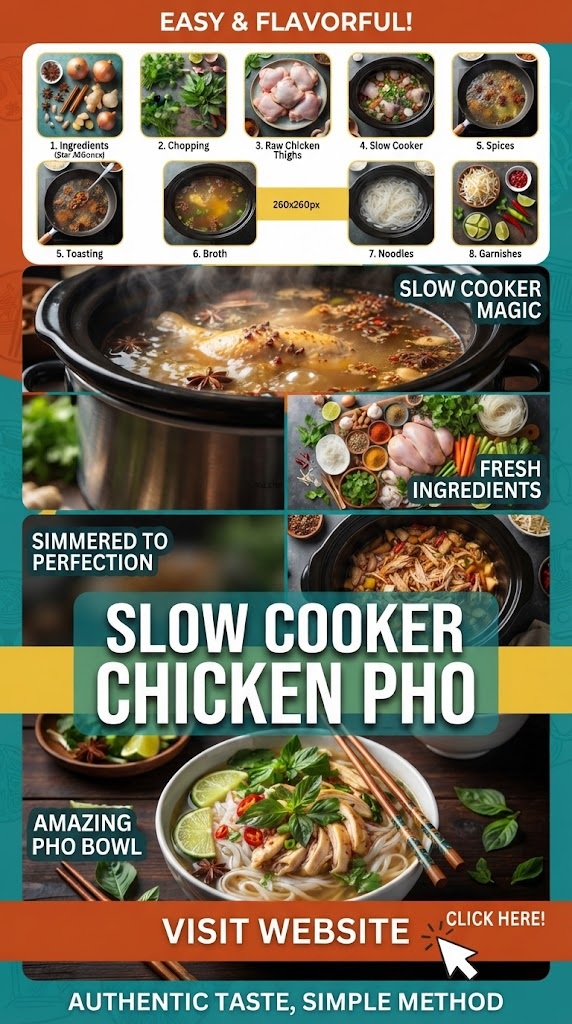
Slow Cooker Chicken Pho
The aroma of a simmering pot of Vietnamese Pho is one of the most comforting scents in the world. It is a fragrance that tells a story of patience, tradition, and a complex balance of flavors—salty, sweet, herbaceous, and deeply savory. Traditionally, a great Pho broth takes many hours, if not days, of careful monitoring over a stovetop. However, the modern home cook has a secret weapon that bridges the gap between ancient tradition and contemporary convenience: the slow cooker.
Slow Cooker Chicken Pho, or Phở Gà, is the ultimate “set it and forget it” meal that doesn’t compromise on quality. By utilizing the gentle, consistent heat of a slow cooker, you can extract every bit of essence from chicken bones and spices, resulting in a broth that is clear, golden, and profoundly flavorful.
In this comprehensive guide, we will dive deep into everything you need to know to create a restaurant-quality bowl of Chicken Pho in your own kitchen. We will explore the history, the science of the broth, the essential ingredients, and the step-by-step techniques that will make your slow cooker the most valuable tool in your culinary arsenal.
The Soul of Vietnamese Comfort: Understanding Phở Gà
While Phở Bò (beef pho) often steals the spotlight with its rich, heavy marrow-based broth, Phở Gà (chicken pho) is its lighter, more delicate cousin. Emerging in Hanoi in the early 20th century—partly due to beef shortages at various points in history—chicken pho quickly became a staple.
What makes chicken pho so special is its purity. It is cleaner on the palate than beef pho, making it the perfect restorative meal for a cold day, a recovery meal when you’re feeling under the weather, or a light dinner that still feels incredibly satisfying.
The “slow cooker” adaptation of this dish is particularly successful because chicken bones and meat do not require the 12-24 hour simmer times that beef bones do. In 6 to 8 hours on a low setting, the slow cooker perfectly mimics the gentle “barely-a-bubble” simmer that Vietnamese grandmothers have mastered over charcoal fires for generations.
Why the Slow Cooker is Perfect for Pho
Many purists might argue that a slow cooker cannot achieve the depth of a stovetop broth. They are, quite simply, mistaken. In fact, the slow cooker offers several advantages for the home cook:
- Temperature Control: A stovetop can fluctuate, leading to a cloudy broth if the water boils too vigorously. A slow cooker maintains a steady, low temperature that keeps the proteins from emulsifying into the fat, ensuring a crystal-clear broth.
- Flavor Extraction: The long, slow steep allows the spices (star anise, cinnamon, cloves) to release their essential oils gradually, preventing them from becoming bitter or overpowering.
- Convenience: You can start your broth before heading to work and come home to a house that smells like a Vietnamese street market, with dinner nearly ready to serve.
- No Evaporation: Because slow cookers are sealed systems, you don’t lose your precious liquid to steam. This means the ratios of water to seasoning remain consistent throughout the cooking process.
The Anatomy of a Perfect Bowl
To make a truly great Chicken Pho, you must understand the five pillars of the dish:
- The Broth (Nước Dùng): The foundation. It must be clear, fragrant, and balanced.
- The Noodles (Bánh Phở): Flat rice noodles that should be slippery and tender, never mushy.
- The Protein: Silky, poached chicken that has been shredded or sliced.
- The Aromatics: Charred onions and ginger that provide the “charred” soul of the soup.
- The Garnishes: Fresh herbs, bean sprouts, lime, and chilies that allow each diner to customize their bowl.
Essential Ingredients: The Shopping List
Before you turn on the slow cooker, you need to gather high-quality ingredients. Because Pho is such a simple soup, the quality of your components will shine through.
1. The Chicken
For the best broth, you need bones and fat.
- A Whole Chicken: Using a whole 3-4 lb chicken is ideal. You get the meat for the soup and the bones for the broth.
- Chicken Backs and Necks: If you want an even deeper flavor, add an extra pound of chicken backs or necks.
- The Meat: If you prefer only white meat, you can use bone-in chicken breasts, but keep in mind that the breast meat can dry out if left in the slow cooker too long. Many experts recommend using a whole bird and removing the meat once it’s cooked through, then returning the bones to the pot.
2. The Spices (The “Pho Kit”)
These are non-negotiable. Without these, you just have chicken noodle soup.
- Star Anise: This is the dominant flavor of Pho. You’ll need 5-6 whole stars.
- Cinnamon Sticks: Use 1-2 sticks of high-quality Cassia or Ceylon cinnamon.
- Coriander Seeds: These add a citrusy, light note.
- Whole Cloves: Just a few (3-4) to add depth.
- Fennel Seeds: Adds a subtle sweetness that complements the star anise.
- Black Cardamom: (Optional but recommended) This adds a smoky, earthy undertone.
3. The Aromatics
- Yellow Onion: Two medium onions, halved and charred.
- Ginger: A large 4-inch piece, sliced lengthwise and charred.
- Shallots: (Optional) Charred shallots add an extra layer of sweetness.
4. Seasoning
- Fish Sauce (Nước Mắm): Use a high-quality brand like Red Boat or Three Crabs. This is where the salt and umami come from.
- Yellow Rock Sugar: This provides a mellow sweetness. If you can’t find it, use granulated sugar or honey, but rock sugar is traditional.
- Salt: To fine-tune at the end.
5. The Noodles and Toppings
- Dried or Fresh Rice Sticks: Look for “Banh Pho” on the label.
- Bean Sprouts: Fresh and crunchy.
- Fresh Herbs: Thai basil, cilantro, and culantro (Ngo Gai).
- Limes: Cut into wedges.
- Chilies: Bird’s eye chilies or sliced jalapeños.
- Condiments: Hoisin sauce and Sriracha.
The Secret Step: Charring and Toasting
If you simply throw raw onions and raw spices into a slow cooker, your Pho will taste “flat.” To unlock the restaurant-style complexity, you must perform two essential tasks: charring the aromatics and toasting the spices.
How to Char the Onion and Ginger
Charring creates a smoky sweetness and colors the broth a beautiful amber.
- The Gas Range Method: Hold the halved onion and ginger over an open flame with tongs until the skins are blackened and the insides are fragrant.
- The Broiler Method: Place the onion and ginger on a baking sheet and broil on high for 5-10 minutes until blackened in spots.
- The Skillet Method: Place them face down in a dry, hot cast-iron skillet until they are deeply browned/blackened.
Pro Tip: Do not wash off the charred bits! That black “dust” is where the flavor lives. Just peel off any excessively loose, papery skin.
How to Toast the Spices
Place your star anise, cinnamon, cloves, coriander, and fennel seeds in a dry pan over medium heat. Shake the pan constantly for 2-3 minutes until you can smell the aroma filling the room. Be careful not to burn them, as they can turn bitter quickly.
Step-by-Step Instructions for Slow Cooker Chicken Pho
Step 1: Prepare the Chicken
Rinse the chicken and remove any excess fat from the cavity. Some people prefer to “parboil” the chicken first to remove impurities. To do this, place the chicken in a large pot of boiling water for 5 minutes, then drain and rinse. This ensures a clearer broth. If you are short on time, you can skip this, but you will need to skim the “scum” from the slow cooker during the first hour of cooking.
Step 2: The Aromatics and Spices
Char your onions and ginger as described above. Toast your spices. Place the spices in a spice bag or a large tea infuser if you want an easier cleanup, or just toss them directly into the pot.
Step 3: Layering the Slow Cooker
Place the chicken (whole or pieces) into the slow cooker. Add the charred onion, charred ginger, toasted spices, rock sugar, and a tablespoon of fish sauce.
Step 4: The Liquid
Add enough cold water to cover the chicken completely (usually about 8-10 cups depending on the size of your slow cooker). Note: Do not overfill. Leave about an inch of space at the top.
Step 5: The Long Simmer
Set your slow cooker to LOW for 6 to 8 hours. If you are using a whole chicken and want the meat to be perfectly tender but not shredded to mush, check the chicken at the 4-hour mark. If it’s cooked through, remove the chicken from the pot, shred the meat, and set it aside in the fridge. Return the bones to the slow cooker to continue extracting flavor for the remaining 4 hours.
Step 6: Straining and Clarifying
Once the time is up, remove the solids. Discard the spices, onions, and bones. Strain the broth through a fine-mesh sieve lined with cheesecloth into a large pot. If there is too much fat on top, use a fat separator or a spoon to skim it off. Vietnamese Pho should have some small “oil bubbles” on top for flavor, but it shouldn’t be greasy.
Step 7: The Final Seasoning
Bring the strained broth to a simmer on the stove. This is the time to perfect the flavor.
- Add more fish sauce for saltiness.
- Add more rock sugar for sweetness.
- A pinch of salt can brighten the overall profile. The broth should be slightly “over-seasoned” because the unseasoned noodles and sprouts will dilute the flavor once added.
Mastering the Rice Noodles
The biggest mistake people make with Pho is cooking the noodles in the broth. Never do this. The starch from the noodles will cloud the broth and turn it into a thick, unappetizing mess.
- Soak: Soak dried rice noodles in cold or lukewarm water for 30 minutes until they are pliable but still firm.
- Boil: Bring a separate pot of water to a boil.
- Flash Cook: Use a noodle basket or a strainer to dip a portion of noodles into the boiling water for only 10-30 seconds. They should be “al dente.”
- Drain: Shake off the excess water and place them immediately into the serving bowl.
Assembly: Plating Like a Pro
The assembly of a bowl of Pho is a ritual.
- The Base: Place the hot, cooked noodles in a large, deep bowl.
- The Meat: Arrange a generous portion of the shredded chicken on top of the noodles.
- The Herbs: Add a few sprigs of cilantro or sliced green onions.
- The Pour: Ladle the boiling hot broth over the noodles and chicken. The heat of the broth will finish warming the chicken and “bloom” the aroma of the green onions.
- The Side Plate: Serve with a plate containing bean sprouts, Thai basil, lime wedges, and sliced chilies. This allows each person to add texture and acidity to their liking.
The Science of the “Clear Broth”
In Vietnamese culture, a clear broth is a sign of a skilled cook. While the slow cooker does most of the work for you, here are three tips for achieving that crystal-clear transparency:
- Don’t Stir: Once you start the slow cooker, leave it alone. Stirring agitates the ingredients and breaks off tiny particles that make the broth cloudy.
- Use Cold Water: Starting with cold water allows the proteins to heat up slowly and coagulate into larger pieces that are easier to strain out, rather than staying suspended in the liquid.
- The Cheesecloth Filter: A standard strainer is not enough. Use 2-3 layers of cheesecloth or a clean muslin cloth to catch the fine sediment.
Health Benefits of Chicken Pho
Beyond its incredible taste, Chicken Pho is a powerhouse of nutrition. It is often referred to as “Vietnamese Penicillin.”
- Bone Broth: The long simmering process extracts collagen, glycine, and minerals from the chicken bones, which are excellent for gut health and joint support.
- Ginger and Garlic: Both have anti-inflammatory and immune-boosting properties.
- Star Anise: Contains shikimic acid, which is a primary ingredient in many anti-viral medications.
- Hydration: The high water content and electrolytes from the salt and fish sauce make it incredibly hydrating.
- Low Calorie: Unlike many creamy soups, Pho is relatively low in calories and fat, especially if you use lean chicken meat and skim the broth.
Troubleshooting Common Issues
My broth is too salty!
If you were heavy-handed with the fish sauce, don’t worry. Add a bit more water or a small amount of unsalted chicken stock to dilute it. You can also add a bit more rock sugar to balance the salt.
My broth is bland.
Usually, this means it needs more salt (fish sauce) or more acidity. Squeeze a lime wedge into your bowl; often, the acidity of the lime acts as a “magnifying glass” for the other flavors. If it still tastes thin, you might not have charred the aromatics enough or toasted the spices sufficiently.
The chicken is dry.
If you leave chicken breast in a slow cooker for 8 hours, it will be dry. To avoid this, use dark meat (thighs/legs) which has more connective tissue, or remove the white meat as soon as it reaches 165°F and set it aside.
The noodles are mushy.
You likely cooked them too long in the boiling water or let them sit in the broth for too long before eating. Pho is meant to be eaten immediately after assembly.
Variations to Try
While the classic Phở Gà is perfect, you can customize the slow cooker method to fit different diets:
- Keto/Low-Carb Pho: Replace the rice noodles with spiralized zucchini (zoodles), shirataki noodles, or thinly sliced cabbage. Skip the rock sugar or use a keto-friendly sweetener like monk fruit.
- Spicy Pho: Add a tablespoon of Sate (Vietnamese chili oil) to the slow cooker or directly into your bowl for a fiery kick.
- Extra Umami: Add a few dried shiitake mushrooms to the slow cooker. This adds an earthy depth that complements the chicken beautifully.
Proper Storage and Reheating
If you have leftovers, store the broth and the solids (meat/noodles) separately.
- Broth: Can be kept in the fridge for up to 5 days or frozen for up to 3 months. When reheating, bring the broth to a rolling boil on the stove before pouring it over fresh or leftover noodles.
- Noodles: Cooked rice noodles don’t store well—they tend to clump and break. It’s always best to cook fresh noodles for leftover broth.
- Chicken: Store in an airtight container for up to 3 days.
Frequently Asked Questions (FAQ)
Can I use store-bought chicken broth?
Yes, you can use store-bought broth as a base to speed things up. However, you should still simmer it in the slow cooker with the charred ginger, onion, and toasted spices for at least 2-4 hours to give it that authentic Pho character.
What is the difference between Thai Basil and Italian Basil?
Thai basil has a purple stem and a distinct licorice or anise-like flavor. Italian basil is much sweeter and more peppery. For Pho, Thai basil is essential; Italian basil will change the flavor profile significantly.
Is fish sauce absolutely necessary?
Yes. Fish sauce provides the essential salt and “umami” (savory) depth. If you are allergic to fish, you can use a combination of soy sauce and salt, but it won’t be an “authentic” Pho flavor.
Why do I need to char the ginger and onion?
Charring creates a chemical reaction (the Maillard reaction) that transforms the sharp, raw flavor of the onion and ginger into something mellow, sweet, and smoky. It also gives the broth its signature golden-brown hue.
The Art of Eating Pho
To truly appreciate your slow-cooked creation, you must eat it like a local in Saigon or Hanoi.
- Taste first: Sip the broth before adding any sauces. Appreciate the work your slow cooker did.
- The Spoon and Chopsticks: Hold your chopsticks in your dominant hand and a deep soup spoon in the other. Use the chopsticks to twirl the noodles and the spoon to “cradle” them, adding a bit of broth and a piece of chicken to each mouthful.
- Don’t over-sauce: Many people squirt Hoisin and Sriracha directly into the bowl. This can overwhelm the delicate broth. Instead, put the sauces in a small side dish and dip the chicken pieces into them.
- Slurp: Slurping isn’t just allowed; it’s encouraged! It pulls air into your mouth, which helps cool the hot broth and aerates the flavors, making them more intense.
Conclusion: A Labor of Love (Simplified)
Slow Cooker Chicken Pho is the perfect example of how modern technology can honor ancient culinary traditions. It respects the slow-simmered essence of the dish while acknowledging the busy lives we lead. By taking the time to char your aromatics and toast your spices, you elevate a simple slow cooker meal into a gourmet experience that rivals the best Pho shops in the United States.
Whether you are looking for a healthy weeknight dinner, a way to feed a large family, or a comforting bowl of “soul food,” this Phở Gà recipe delivers. The slow cooker handles the heat, the chicken provides the heart, and the spices provide the magic. All that’s left for you to do is assemble your bowl, sit back, and enjoy the steam rising from a perfect, golden broth.
Happy cooking, and even happier slurping!