
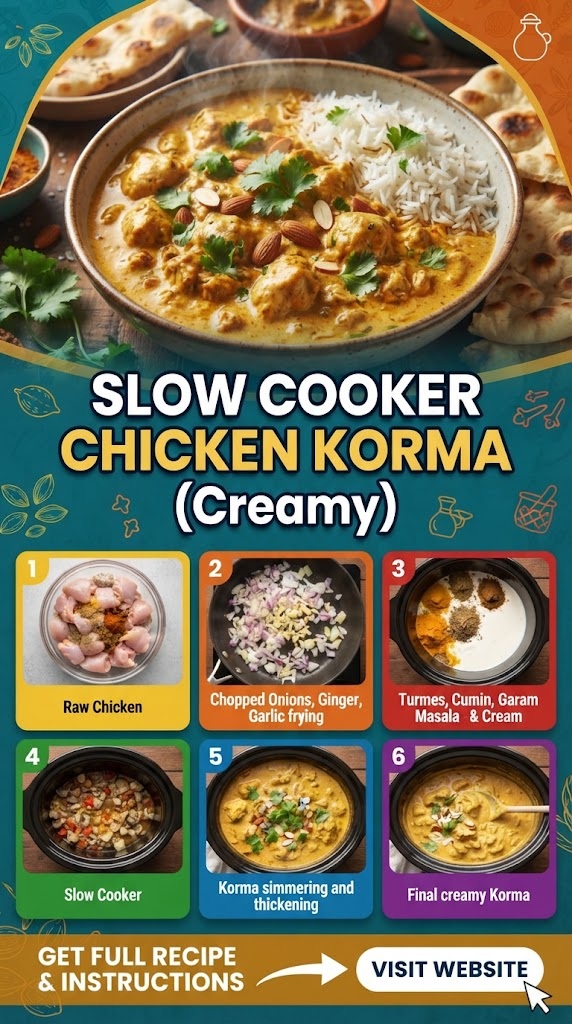
Slow Cooker Chicken Korma (Creamy)
There are few dishes in the pantheon of global cuisine that command as much respect and affection as the Korma. A staple of Indian restaurants from London to New York, and a crown jewel of the historic Mughal Empire’s royal kitchens, Korma is the epitome of culinary elegance. When you combine this sophisticated, mildly spiced, and velvety curry with the modern convenience of a slow cooker, magic happens.
This guide is designed to take you on a deep dive into the world of Slow Cooker Chicken Korma. Whether you are a seasoned home cook or a beginner looking to impress, this comprehensive resource covers everything from the historical roots of the dish to the science of slow-cooking dairy without curdling.
Prepare your senses for a journey through aromatic spices, silky nut pastes, and succulent chicken—all simmered to perfection while you go about your day.
What is Chicken Korma? Understanding the Roots
Before we dive into the pot, we must understand the heritage of the dish. The word “Korma” (or qorma) is derived from the Urdu word kormā, meaning “to braise.” This technique involves searing meat at a high temperature and then cooking it slowly with minimal liquid, allowing the meat to release its juices and meld with a thick, yogurt-based sauce.
The Mughal Connection
The Korma we know today evolved in the 16th century in the imperial kitchens of the Mughal Empire. It was a dish designed for royalty, often featuring expensive ingredients like saffron, cream, and ground nuts (almonds or cashews). Unlike the fiery heat of a Vindaloo or the tangy profile of a Madras curry, Korma is celebrated for its subtlety, depth, and creamy texture.
Modern Adaptations
In the West, particularly in the United States and the UK, Chicken Korma has become synonymous with a mild, sweet, and creamy curry that serves as the perfect “entry point” for those new to Indian flavors. While traditional Kormas can be spicy, the “creamy” version we are focusing on today leans into the richness of coconut milk, heavy cream, and nut butters to create a soul-warming comfort food.
Why Use a Slow Cooker for Chicken Korma?
While traditionalists might argue for a heavy-bottomed handi (clay pot) over an open flame, the slow cooker (or Crock-Pot) is actually uniquely suited for a Korma for several reasons:
- Tenderization: The low and slow heat breaks down the connective tissues in chicken thighs, making them melt-in-your-mouth tender.
- Flavor Infusion: Spices like cardamom, cinnamon, and cloves need time to release their essential oils. A 4-to-8-hour cook cycle allows these flavors to penetrate deep into the meat.
- Consistency: The enclosed environment of a slow cooker prevents moisture loss, ensuring your sauce remains thick and luscious without the risk of burning the bottom of the pan.
- Convenience: For the busy American household, being able to prep in the morning and return to a gourmet meal in the evening is an unbeatable advantage.
The Essential Ingredients: A Deep Dive
To achieve a restaurant-quality Slow Cooker Chicken Korma, you cannot cut corners with ingredients. Each component plays a vital role in building layers of flavor.
1. The Protein: Chicken Thighs vs. Breasts
For a slow cooker, boneless, skinless chicken thighs are the undisputed winner. Thighs contain more fat and connective tissue, which means they remain juicy even after hours of cooking. If you use chicken breasts, they can become fibrous and dry if cooked for more than 3 or 4 hours.
2. The Aromatics: Ginger, Garlic, and Onions
These form the “holy trinity” of Indian cooking.
- Onions: For a truly rich Korma, some chefs prefer to use fried onions (Birishta) blended into a paste. In a slow cooker, finely diced yellow onions will soften until they virtually disappear, thickening the sauce.
- Ginger and Garlic: Always use fresh pastes if possible. The pungency of fresh ginger balances the sweetness of the cream.
3. The Spice Blend (Masala)
A Korma is defined by its “warm” spices rather than “hot” spices.
- Cardamom (Green): The star of the show. It provides a floral, citrusy note.
- Cinnamon and Cloves: These add a woody, sweet depth.
- Coriander and Cumin: For earthy, citrusy undertones.
- Turmeric: Primarily for that signature golden hue.
- Garam Masala: A finishing spice blend added near the end to preserve its volatile aromas.
4. The Creamy Base: Nuts and Dairy
This is where the “Creamy” in our title comes from.
- Cashew or Almond Paste: Traditional Korma uses ground nuts to provide body and a subtle nuttiness.
- Coconut Milk or Heavy Cream: While coconut milk adds a tropical sweetness, heavy cream (or double cream) provides a more classic, velvety finish.
- Yogurt: Full-fat Greek yogurt adds a necessary tang that cuts through the richness.
Step-by-Step Recipe: Creamy Slow Cooker Chicken Korma
This recipe serves 4–6 people and is designed for a 6-quart slow cooker.
Ingredients List
- 2 lbs Boneless, skinless chicken thighs (cut into 1.5-inch chunks)
- 2 Large yellow onions (finely minced or pulsed in a food processor)
- 3 tbsp Ghee or neutral oil (avocado or vegetable oil)
- 4 cloves Garlic (minced)
- 1-inch piece Fresh ginger (grated)
- 1/2 cup Raw cashews (soaked in warm water for 20 mins, then blended into a paste with a splash of water)
- 1 cup Full-fat Greek yogurt (whisked until smooth)
- 1/2 cup Heavy cream or full-fat canned coconut milk
- 1 tbsp Tomato paste (for color and acidity)
- 1 tsp Turmeric powder
- 2 tsp Ground coriander
- 1 tsp Ground cumin
- 1/2 tsp Cayenne pepper (optional, for a tiny kick)
- 1 tsp Salt (adjust to taste)
- Whole Spices: 4 green cardamom pods (cracked), 1 cinnamon stick, 3 cloves.
- To Finish: 1 tsp Garam Masala, a handful of fresh cilantro, and toasted almond slivers.
Detailed Instructions
Step 1: The Searing (The Flavor Foundation)
While you can simply dump everything into the slow cooker, taking 10 minutes to sear will elevate your dish from “good” to “extraordinary.” Heat ghee in a skillet over medium-high heat. Add the whole spices (cardamom, cinnamon, cloves) and let them sizzle for 30 seconds. Add the onions and sauté until they turn a light golden brown. Stir in the ginger and garlic for another minute.
Step 2: Toast the Ground Spices
Add the turmeric, coriander, cumin, and tomato paste to the skillet. Stir constantly for 30–60 seconds. This “blooms” the spices, releasing their fat-soluble flavors. Transfer this aromatic mixture into the slow cooker insert.
Step 3: Combine
Add the raw chicken chunks to the slow cooker. Pour in the cashew paste and whisked yogurt. Stir everything together until the chicken is thoroughly coated.
Pro Tip: Do not add the heavy cream or coconut milk yet. Adding high-fat dairy too early in a slow cooker can sometimes cause it to separate or “break” over a long cook time.
Step 4: Slow Cook
Cover and cook on LOW for 4 to 5 hours or on HIGH for 2 to 3 hours. Low is always preferred for the most tender results.
Step 5: The Creamy Finish
About 30 minutes before serving, stir in the heavy cream (or coconut milk) and the Garam Masala. Taste and adjust salt. If the sauce is too thick, add a splash of chicken broth. If it’s too thin, leave the lid off for the final 20 minutes of cooking.
Step 6: Garnish and Serve
Discard the whole cinnamon stick and cardamom pods if you find them. Garnish generously with fresh cilantro and toasted almonds.
The Science of Creaminess: Avoiding Curdled Sauces
One of the biggest challenges with slow-cooking Indian food is the dairy. Yogurt and cream are acidic and protein-rich, making them prone to curdling when exposed to heat for long periods.
How to Prevent Curdling:
- Room Temperature: Never add fridge-cold yogurt or cream to a hot slow cooker. Let them sit on the counter for 20 minutes first.
- Whisking: Whisk your yogurt thoroughly before adding it. This breaks up protein clumps.
- Full Fat Only: Never use fat-free or low-fat yogurt. The fat acts as a stabilizer.
- The Starch Buffer: If you are worried, mix a teaspoon of cornstarch or flour into the yogurt before adding it. This helps bind the proteins and prevents separation.
Customizing Your Korma: Variations for Every Diet
The beauty of Chicken Korma is its versatility. Here is how you can adapt this recipe to fit various dietary needs:
1. The Vegan/Dairy-Free Version
- Protein: Swap chicken for extra-firm tofu, chickpeas, or cauliflower florets.
- Cream: Use full-fat coconut milk or cashew cream exclusively.
- Fat: Use coconut oil instead of ghee.
2. The Keto (Low Carb) Version
Chicken Korma is naturally quite keto-friendly. To keep the carbs even lower:
- Ensure your tomato paste has no added sugar.
- Use heavy cream instead of yogurt (which has natural lactose sugars).
- Serve over cauliflower rice instead of Basmati rice.
3. The Spicy Korma
If you prefer heat, don’t just add more chili powder—that can make the dish bitter. Instead, add 2–3 slit green chilies (Serrano or Thai Bird’s Eye) into the slow cooker at the beginning. This adds a “fresh” heat that permeates the sauce.
Perfect Pairings: What to Serve with Chicken Korma
A dish as rich as Korma needs the right companions to balance the palate.
The Grains
- Basmati Rice: Long-grain, fragrant Basmati is the traditional choice. For a special touch, add a few saffron strands or a pinch of turmeric to the rice water.
- Jeera Rice: Rice tempered with cumin seeds and ghee.
The Breads
- Garlic Naan: The soft, pillowy texture of naan is perfect for scooping up the thick Korma sauce.
- Peshawari Naan: A sweet naan filled with nuts and raisins that complements the nuttiness of the Korma.
- Roti or Chapati: For a lighter, whole-wheat option.
The Sides
- Kachumber Salad: A simple mix of diced cucumbers, tomatoes, and red onions with lemon juice and salt. The acidity cuts through the creamy curry.
- Raita: A cooling yogurt dip with mint or cucumber.
- Mango Chutney: The sweet and tangy preserve provides a beautiful contrast to the savory spices.
Troubleshooting Common Issues
“My sauce is too watery.”
Slow cookers trap steam, which turns into water and thins out sauces. To fix this:
- The Reduction Method: Transfer the sauce to a saucepan and simmer on the stove for 10 minutes.
- The Slurry Method: Mix 1 tbsp of cornstarch with 2 tbsp of cold water and stir it into the slow cooker 30 minutes before finishing.
- Nut Paste: Add more ground cashew or almond meal.
“The chicken is dry.”
This usually happens if you used chicken breast or cooked it on “High” for too long. Stick to thighs and use the “Low” setting. If the meat is already dry, shred it into the sauce; the increased surface area will allow the meat to soak up the gravy.
“The flavor is bland.”
Korma is mild, but it shouldn’t be flavorless.
- Salt: Often, “bland” just means “needs salt.” Salt is a flavor enhancer that makes the spices pop.
- Acidity: Add a squeeze of fresh lemon juice at the very end.
- Bloom your spices: Ensure you didn’t skip the step of frying the spices in oil/ghee.
Storage, Meal Prep, and Freezing
Slow Cooker Chicken Korma is a meal prep dream. Like many stews and curries, it actually tastes better the next day as the flavors continue to develop.
- Refrigeration: Store in an airtight container for up to 4 days. When reheating, add a splash of water or milk to loosen the sauce.
- Freezing: You can freeze Korma for up to 3 months. However, be aware that dairy-heavy sauces can sometimes change texture upon thawing (they may look grainy). To fix this, whisk the sauce vigorously while reheating it on the stove.
- Reheating Tip: Avoid the microwave if possible. Reheat gently on the stovetop over low heat to prevent the chicken from becoming rubbery.
The Health Benefits of Korma Spices
Beyond its incredible taste, the spices used in Chicken Korma offer numerous health benefits, making this a nutritious choice for your family.
- Turmeric: Contains curcumin, a powerful anti-inflammatory and antioxidant.
- Ginger: Known for aiding digestion and reducing nausea.
- Garlic: Supports heart health and boosts the immune system.
- Cinnamon: Helps regulate blood sugar levels.
- Cardamom: May help with digestive issues and has been linked to improved oral health.
By making this dish at home rather than ordering takeout, you also control the amount of sodium and refined fats, making it a much heartier and healthier alternative.
Advanced Tips for the Korma Connoisseur
If you’ve mastered the basic recipe and want to take your Korma to the “Michelin Star” level, consider these professional tweaks:
1. Infuse Your Own Ghee
Instead of using store-bought ghee, melt butter and simmer it with a few cardamom pods and a bay leaf until the milk solids brown. Strain it and use this “infused ghee” to sauté your onions.
2. The Saffron Bloom
Soak a pinch of saffron threads in two tablespoons of warm milk for 15 minutes. Drizzle this over the Korma just before serving. It adds a royal yellow tint and an incomparable floral aroma.
3. Use Whole Spices in a Sachet
If you dislike biting into a whole clove or cardamom pod, place your whole spices in a piece of cheesecloth or a tea infuser. Submerge it in the slow cooker and remove it easily before serving.
4. Caramelize the Onions Properly
The secret to a dark, rich Korma is the onions. Spend the extra time to slow-fry them until they are a deep mahogany color. This provides a natural sweetness that sugar or honey cannot replicate.
Frequently Asked Questions (FAQs)
Can I make this in an Instant Pot?
Yes! Use the “Sauté” function for the onions and spices, then add the chicken and yogurt. Manual pressure cook for 8–10 minutes, followed by a natural pressure release. Stir in the cream at the end.
Is Chicken Korma gluten-free?
Yes, this recipe is naturally gluten-free. Just ensure your spices are pure and haven’t been processed in a facility with wheat.
Can I use bone-in chicken?
Absolutely. Using bone-in chicken thighs will actually result in a deeper, more flavorful sauce due to the marrow and collagen released from the bones. You may need to increase the cook time by about 30–60 minutes.
What is the difference between Korma and Tikka Masala?
Tikka Masala is a tomato-based curry with a significant amount of grilled/charred meat flavor. Korma is nut and yogurt-based, focusing on sweetness and creaminess rather than the tangy tomato profile of Tikka Masala.
Conclusion: Bringing the Royal Court to Your Kitchen
The Slow Cooker Chicken Korma is more than just a meal; it is a testament to how traditional culinary techniques can evolve to fit our modern, fast-paced lives. By utilizing the slow cooker, you are honoring the ancient “braising” roots of the Korma while reclaiming your time.
This dish is a crowd-pleaser that bridges the gap between exotic and familiar. Its creamy texture appeals to children, while its complex spice profile satisfies the most discerning foodies. The next time you find yourself craving a warm, comforting bowl of goodness, skip the delivery app and reach for your slow cooker.
With the right spices, a bit of patience, and the tips outlined in this guide, you will create a Chicken Korma that rivals the best Indian restaurants in the country. Happy cooking!