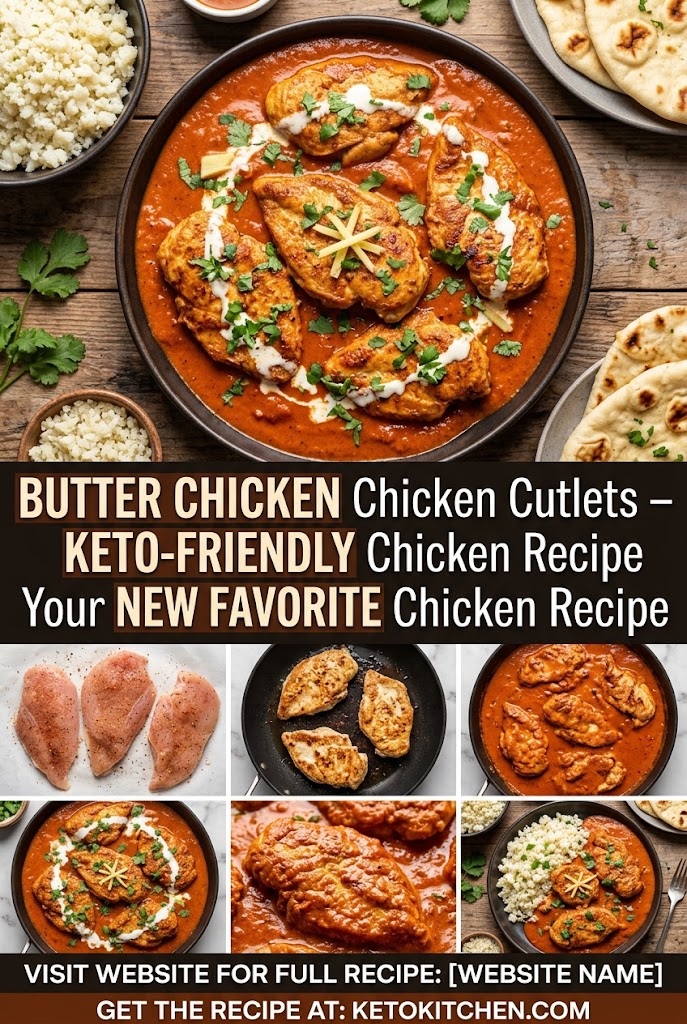
Butter Chicken Chicken Cutlets – Keto-Friendly Chicken Recipe Your New Favorite Chicken Recipe
There is a certain magic that happens when the aromatic, velvety richness of traditional Indian cuisine meets the crispy, satisfying texture of a classic chicken cutlet. For those following a ketogenic lifestyle, the challenge has always been finding that perfect balance between indulgent flavor and strict macronutrient requirements. Traditional Butter Chicken (Murgh Makhani) is often served with carb-heavy naan or rice, and many commercial sauces are thickened with sugar or cornstarch.
Enter the Butter Chicken Chicken Cutlet. This recipe reimagines a world-renowned classic into a low-carb masterpiece. By swapping out the flour-based breading for a keto-compliant crust and ensuring the sauce is rich in healthy fats without the hidden sugars, we create a dish that isn’t just a “diet version”—it’s arguably better than the original.
In this comprehensive guide, we will explore every facet of this dish, from its historical roots to the science of the perfect keto breading, and a step-by-step methodology to ensure your kitchen smells like a high-end Delhi eatery.
The Philosophy of the Keto Butter Chicken Cutlet
The ketogenic diet relies on high fats, moderate protein, and very low carbohydrates. Usually, when we think of “Butter Chicken,” we think of small cubes of chicken swimming in a large bowl of sauce. By shifting the format to a cutlet, we change the eating experience entirely.
The cutlet provides a larger surface area for the sauce to cling to, while the “breading” offers a textural contrast that is often missing in stew-like keto meals. It transforms a humble curry into a sophisticated plate that feels like a “restaurant-style” entrée.
Why This Recipe Works
- High-Quality Fats: We use ghee and heavy cream, which are keto staples.
- Zero Grain: No flour or breadcrumbs are used; instead, we rely on almond flour and parmesan.
- Aromatic Depth: By toasting our spices, we unlock flavors that make you forget you’re “dieting.”
- Satiety: The combination of protein and healthy fats keeps you full for hours.
Ingredients: The Building Blocks of Flavor
To achieve a five-star result, the quality of your ingredients is paramount. Here is what you will need, broken down by the components of the dish.
1. The Chicken Cutlets
- Chicken Breast: 1.5 lbs, sliced into thin cutlets and pounded to an even thickness.
- Almond Flour: Super-fine blanched almond flour provides the base for our breading.
- Parmesan Cheese: Grated finely to add a salty, umami kick and help the crust crisp up.
- Spices for Breading: Garlic powder, onion powder, and a pinch of salt.
- Egg Wash: Two large eggs beaten with a splash of heavy cream.
2. The Iconic Makhani Sauce (Butter Sauce)
- Ghee (Clarified Butter): The traditional fat used in Indian cooking. It has a high smoke point and a nutty flavor.
- Tomato Paste/Puree: Use a high-quality tomato puree with no added sugar.
- Heavy Whipping Cream: This provides the “butter” in Butter Chicken.
- Unsalted Butter: Added at the end for that signature glossy finish.
- Aromatics: Fresh ginger paste and garlic paste are non-negotiable.
3. The Spice Blend (The Heart of the Dish)
- Kashmiri Red Chili Powder: Known for its vibrant red color but mild heat.
- Garam Masala: A warm blend of cinnamon, mace, peppercorns, and cardamom.
- Ground Coriander and Cumin: For earthy undertones.
- Kasuri Methi (Dried Fenugreek Leaves): The secret ingredient. This gives Butter Chicken its distinctive “restaurant” aroma.
- Turmeric: For a golden hue and anti-inflammatory benefits.
Step-by-Step Preparation: Mastering the Technique
Phase 1: Preparing the Cutlets
The secret to a great cutlet is even thickness. If one side of the chicken is thicker than the other, you’ll end up with a piece that is dry on the edges and raw in the middle.
- Butterfly and Pound: Slice your chicken breasts horizontally. Place them between two sheets of plastic wrap and use a meat mallet to pound them until they are about 1/2 inch thick.
- The Breading Station: Set up three shallow bowls.
- Bowl 1: A light dusting of almond flour with a pinch of salt.
- Bowl 2: The egg wash (eggs and a tablespoon of heavy cream).
- Bowl 3: A mixture of almond flour, grated parmesan, garlic powder, and a teaspoon of Kashmiri chili powder.
- Dredging: Dip the chicken into the flour, then the egg, then the almond-parmesan mixture. Press the coating firmly into the meat to ensure it sticks during frying.
Phase 2: Frying the Cutlets
To keep this keto-friendly, we avoid vegetable oils. Instead, use ghee or avocado oil.
- Heat a large skillet over medium-high heat. Add 2 tablespoons of ghee.
- Once the oil is shimmering, add the cutlets. Do not crowd the pan; work in batches if necessary.
- Fry for 3–4 minutes per side until the crust is golden brown and the internal temperature of the chicken reaches 165°F (74°C).
- Remove the cutlets and let them rest on a wire rack. This prevents the bottom from getting soggy.
Phase 3: The Velvety Butter Sauce
While the chicken rests, it’s time to build the sauce in the same pan (don’t wash it! Those brown bits are pure flavor).
- Sauté Aromatics: Add another tablespoon of ghee. Sauté the ginger and garlic paste until the raw smell disappears (about 1 minute).
- Toast Spices: Add the cumin, coriander, turmeric, and Kashmiri chili powder. Toasting them in oil for 30 seconds “blooms” the spices.
- The Base: Stir in the tomato puree. Let it cook down for 5 minutes until the oil starts to separate from the tomatoes.
- The Creamy Finish: Lower the heat to medium-low. Slowly pour in the heavy cream while whisking constantly. Watch as the sauce turns that beautiful iconic orange color.
- The Finishing Touches: Stir in the garam masala and the crushed Kasuri Methi. Finally, whisk in 2 tablespoons of cold butter to emulsify the sauce and give it a professional sheen.
Nutritional Breakdown: Why This Fits Your Keto Goals
When following a keto diet in the USA, many people struggle with “flavor fatigue.” Chicken and broccoli can only take you so far. This recipe provides a significant caloric punch from healthy fats, which is essential for maintaining ketosis.
- Net Carbs: By using almond flour instead of wheat flour and avoiding sugar-laden canned sauces, a single serving of these cutlets typically contains only 4–6g of net carbs.
- Healthy Fats: Ghee and heavy cream are rich in fat-soluble vitamins (A, D, E, and K).
- Protein: Chicken breast is a lean, high-quality protein source that helps maintain muscle mass while you burn fat.
Pro-Tips for the Perfect Keto Breaded Cutlet
Cooking with almond flour is different than cooking with all-purpose flour. Here are some expert tips to ensure success:
1. Temperature Control
Almond flour and parmesan cheese burn faster than traditional flour. If your pan is too hot, the crust will be black before the chicken is cooked. Keep your heat at a steady medium and watch for the “golden-brown” cue.
2. The “Resting” Rule
Never pour the sauce directly over the cutlets in the pan if you want to maintain the crunch. Instead, pour a pool of sauce on the plate and place the cutlet on top. This keeps the top of the breading crispy while the bottom soaks up the gravy.
3. The Power of Fenugreek
If your butter chicken tastes “good but not great,” it’s probably missing Kasuri Methi (dried fenugreek). This herb is the backbone of North Indian cuisine. Take a pinch, rub it between your palms to release the oils, and sprinkle it into the sauce at the very end.
Serving Suggestions: What to Eat With Keto Cutlets
Since rice and naan are off the table, you need low-carb alternatives that can handle the richness of the Makhani sauce.
- Cauliflower Rice: Sautéed with a little cumin and turmeric, cauliflower rice is the perfect vessel for soaking up extra sauce.
- Keto Garlic Naan: Made with almond flour, mozzarella cheese, and egg (Fathead dough), this is a game-changer for those who miss bread.
- Steamed Asparagus or Broccolini: The green bitterness of these vegetables cuts through the richness of the butter sauce beautifully.
- Cucumber Raita: A side of full-fat Greek yogurt mixed with grated cucumber and mint provides a cooling contrast to the warm spices.
Frequently Asked Questions (FAQs)
Can I use chicken thighs instead of breasts?
Absolutely. Chicken thighs are actually more keto-friendly because of their higher fat content. However, they are harder to “cutlet” because of their shape. If using thighs, you may want to pound them flat or simply fry them as “boneless thighs” rather than thin cutlets.
Is tomato paste keto-friendly?
In moderation, yes. Tomatoes do contain natural sugars, but since we are using a concentrated amount spread across several servings, the impact on your daily carb count is minimal. Always check the label to ensure there is no “added sugar” or “high fructose corn syrup.”
Can I make this dairy-free?
Yes! To make this dairy-free keto, swap the ghee for coconut oil, the heavy cream for full-fat canned coconut milk, and the butter for a vegan butter alternative. The flavor profile will shift slightly toward a South Indian style, but it will still be delicious.
How do I store and reheat leftovers?
Store the cutlets and the sauce in separate airtight containers in the refrigerator for up to 3 days. To reheat, place the cutlets in an air fryer or oven at 350°F for 5 minutes to restore the crunch. Heat the sauce in a small saucepan over low heat, adding a splash of water or cream if it has thickened too much.
The History of Butter Chicken: A Culinary Legend
Understanding the history of a dish adds a layer of appreciation to the cooking process. Butter Chicken, or Murgh Makhani, was invented by accident in the 1950s at the Moti Mahal restaurant in Delhi, India.
The cooks needed a way to salvage tandoori chicken that had dried out. They created a sauce made of tomatoes, butter, and cream to rehydrate the meat. The dish became an overnight sensation, eventually traveling across the globe to become one of the most popular Indian dishes in the United States and the UK.
By turning it into a cutlet, we are participating in the long tradition of culinary evolution—taking the flavors of the past and adapting them for the dietary needs of the present.
The Ultimate Keto Makhani Spice Guide
If you want to take your spice game to the next level, consider grinding your own spices. The difference in aroma between pre-ground powder and freshly toasted seeds is astronomical.
- Cumin: Buy whole seeds, toast them in a dry pan until they pop, and grind them. This adds a smoky depth.
- Cardamom: Use green cardamom pods. The seeds inside provide a floral sweetness that balances the acidity of the tomatoes.
- Cinnamon: A small stick simmered in the sauce and then removed adds a “hidden” warmth that makes people wonder what your secret ingredient is.
Common Mistakes to Avoid
Even seasoned cooks can run into trouble with fusion recipes. Keep an eye out for these pitfalls:
- The Sauce is Too Thin: If your sauce looks watery, let it simmer uncovered for a few extra minutes. The heavy cream should naturally thicken as the water evaporates.
- The Breading Falls Off: This usually happens if the chicken was too wet before breading. Pat your chicken dry with paper towels before the first dip in almond flour.
- The Spices Taste Bitter: This happens if you burn the ginger-garlic paste or the ground spices. If the pan gets too hot and the spices turn black, it’s best to start the sauce over. Bitter spices cannot be masked with cream or sugar.
Conclusion: Why You Need This Recipe in Your Rotation
The Butter Chicken Chicken Cutlet is more than just a meal; it’s a solution. It solves the “boring keto” problem, the “Indian food is too carby” problem, and the “what should I cook for dinner that the whole family will eat” problem.
Whether you are a strict keto follower or simply someone looking for a high-protein, gluten-free dinner option, this dish delivers on every front. It is crunchy, creamy, spicy, and satisfying. By following this guide, you aren’t just making dinner—you are mastering a piece of culinary fusion that brings the best of the East and West together on one plate.
Prepare your ingredients, heat up your skillet, and get ready to experience your new favorite chicken recipe. Your taste buds—and your macros—will thank you.